
Corrections Policy | Lead Stories
Did you spot a mistake? Do you have additional info? Let us know via our contact page...
Why, how and when we update articles:
Lead Stories aims to get correct information out as soon as possible after we detect a piece of trending content that contains a falsehood. This means that sometimes we will publish an initial version of a story as soon as we have enought facts and evidence needed to prove something is not real, with updates to follow later.
In some other cases reality catches up with us: that celebrity death hoax where we concluded the person was still alive might need an update when they actually die a few years later. Science may make new discoveries, so at some time in the future there *really* may be a proper study that actually confirms something which hasn't been "scientifically proven" yet today.
Unfortunately sometimes we also make mistakes (although we try our best to avoid them and we have editors who are supposed to catch them before publication). A source might provide incorrect info to us, contradicting information from a more reliable source may appear, someone might make a mistake in their math or logic, something may get formulated incorrectly (by omitting a word or phrase or by messing up the order...), there could be a copy-paste error, a quote could be misheard...
And sometimes we just make typos or mess up grammar.
Updates
Additional facts can be added to a story after the initial publication which provide additional support or evidence for the conclusion but which don't change it. In such cases there will be a note at the bottom the article in the "Updates" section, along with the date/time when the updates were made. An updated article will get a notification that reads "STORY UPDATED: check for updates below" below the headline.
In cases where the fact check was correct at the time of publication but where "reality caught up" and made the conclusion incorrect we will update the story in the same way when we become aware of the new information (think articles about death hoaxes where the person actually dies a few years later or stories that pointed out there was no scientific evidence for something at the time of publication but where science has since made a new discovery).
Corrections
Articles that are corrected for any of the reasons listed below reasons will be listed on our "Corrections" page.
- If it turns out we had wrong or incomplete information in a part of a story and the correct information was available at the time of publication (we will also make a note in the updates section after fixing the mistake).
- If the addition of new information or a review of the existing information warrants changing the conclusion of a fact check we will also alter the title of the story (and possibly the main image caption) because the conclusion of each fact check is part of the headline and the reason for the conclusion is usually in the caption (as you can read on our "How We Work" page).
- If spelling, style, grammar, transcription, math, logic or copy-paste mistakes affect the conclusion of a story (they also warrant a note in the updates section after fixing).
Note: some of the older stories on the "Corrections" page are actually just updates that wouldn't be included anymore under the current version of this policy.
Silent changes
We can and do silently correct grammar, spelling and style in articles post-publication as long as it doesn't change the information or conclusion. We feel that fixing a random typo doesn't really merit explicit notification (unless for example it is in a name important to the story and it might lead to confusion about who or what we are talking about exactly).
Headline & Caption changes on social media
Stories where the headline or caption changes will also be entered into Twitter's Card Validator and Facebook's Sharing Debugger tools after the update, which will update the headline and caption of the story everywhere the link has been shared on Twitter and Facebook, making sure that even people who only see the story on those platforms get to see the updated version..
About Us


Lead Stories is a fact checking website that is always looking for the latest false, misleading, deceptive or inaccurate stories, videos or images going viral on the internet.
Spotted something? Let us know!.
Lead Stories is a:
- Verified signatory of the IFCN Code of Principles
- Verified EFCSN member
- Founding sponsor of Indicator's Show & Tell Podcast
Google Preferred Source
Get more fact-checks in your Google Search results by setting up leadstories.com as one of your preferred sources.
Most Read
-

-
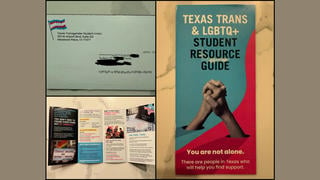
Fact Check: Flyers Were NOT Sent By 'Texas Transgender Student Union' -- There Is NO Such Group
Fact Check
-

Fact Check: Video Does NOT Prove Trump Waved To Nobody Before Boarding Marine One -- People Are Outside Camera View
Fact Check
-

Fact Check: FAKE Video Shows Tesla Roadster Flying Off Building Roof In The Middle Of A City -- It Is AI-Generated
Fact Check
-

Fact Check: X Engineering Did NOT Post Bookmarks Will Be Public Starting Next Week -- Fake Screenshot From Parody Account
Fact Check
-
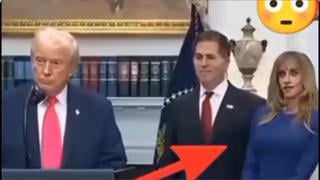
Fact Check: Video Does NOT Show The "Strange Behavior Of A Woman" At The White House
Fact Check
-

Fact Check: Image Of Woman With 'Refugees Welcome Here' Sign Does NOT Show October 2026 French Protests -- It Is AI-Altered Photo From London 2016
Fact Check
Most Recent
-

Fact Check: Edited Video Does NOT Prove Sweden's King Refused To Shake Zelenskyy's Hand
Fact Check
-

Fact Check: FAKE Video Of Man Who Rescues, Raises, Releases Injured Polar Bear Cub -- It's From An AI Content Maker
Fact Check
-

Fact Check: FAKE Video of Tesla Roadster Jumping Off Golden Gate Bridge Is AI-Generated -- Digital Aerobatics
Fact Check
-

Fact Check: Toronto Sun Did NOT Report That Zelenskyy Bought '$42M Underground Nuclear Bunker' In Canada -- Story Is From Impostor Site
Fact Check
-

Fact Check: Anna Kelly Is NOT Officially Trump's Next White House Press Secretary -- No Successor Named
Fact Check
-

Prebunk: Houses on Stilts Lift You Above Reality -- Flood of AI-Generated Hydraulic Escape Systems
Fact Check
-
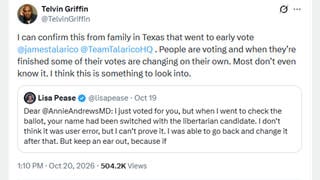
What We Know About Claims That Early Voters' Ballots Were Switched in States Including Florida, Ohio, South Carolina, Tennessee, Texas
Fact Check